AI & Workflow Automation Consulting
Make AI useful in the business you actually run.
I combine operational experience with practical AI to understand what needs improving, choose an approach, and help put it into practice. That can mean simplifying a task, connecting a workflow, or helping your team use AI effectively—with clear checks and ownership.
- Find the opportunity
- Put AI to work
- Help your team use it.
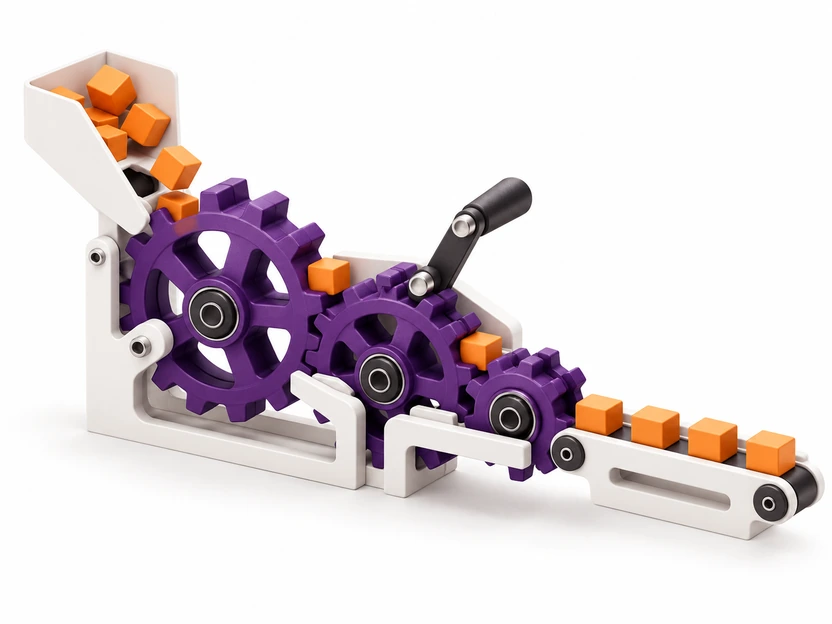
Opportunity, implementation, and team training
We can begin with one useful task or a connected workflow. Depending on your needs and agreed scope, support can include:
- Opportunity review: identify suitable tasks and assess the tools you already use.
- Workflow implementation: configure and test an agreed workflow, with clear permissions, approval points, and fallbacks.
- Team training and handover: document procedures, retain your access to your data, and establish an accountable owner.
For agreed implementation work, a Business Operations Specialist can help with systems setup, workflow coordination, and hands-on project tasks. I lead the strategy, recommendations, and quality review as Founder & Principal Consultant. We agree on responsibilities, scope, availability, and both rates before work begins.
See shared implementation support and pricing →
I built the initial Sense Make website with AI in less than a week—directing, reviewing, and refining the work myself.
What could AI help you do?
A few starting points for your business—and a little everyday help. We can explore other uses that fit your needs.
- Communications: Draft clearer emails, prepare for difficult conversations, adjust tone for your audience, and turn rough thoughts into useful messages.
- Meetings and follow-through: Turn meeting notes into summaries, action items, and follow-up drafts.
- Marketing and content: Develop ideas, draft website or social content, and adapt a message for different audiences.
- Vendors and collections: Track renewals, organize invoices, prepare follow-ups, and flag exceptions.
- Finances, budgeting, and reporting: Organize financial information, draft budgets and reports, compare planning scenarios, and flag variances—with people checking the numbers and assumptions.
- Onboarding and offboarding: Coordinate checklists, equipment, access requests, and handoffs.
- Hiring: Develop job descriptions, structured interviews, and candidate summaries against clear requirements, with people making hiring decisions.
- Planning and decisions: Compare options, draft procedures, and organize business-startup steps, checking official requirements with the relevant agencies.
- Everyday life: Plan an event, adapt a recipe, or figure out dinner from what’s already in your fridge.
The best starting point is something that takes too much time, creates friction, or keeps getting put off. Let’s see what could work better.
When AI isn’t the right answer
We start with what your business needs. AI can support the work, while your team’s experience and judgment guide the way forward.
These are just a few examples of where human judgment matters and AI may not be the right answer.
- Judgment and priorities: AI can compare options; people decide which trade-offs fit the business, its values, and the situation.
- People and relationships: AI can help prepare a conversation; people listen, build trust, and handle the consequences.
- Responsibility and sensitive decisions: Hiring, pay, financial commitments, and highly sensitive information need accountable people, appropriate expertise, and careful checks.
- Knowing what actually needs fixing: Understand the problem first. Sometimes the answer is a clearer process, a better conversation, or a change in responsibilities.
We turn to AI for possibility. AI needs people to give it purpose, direction, and judgment. The best work brings both together.
AI needs someone who will question it.
Many AI assistants use large language models (LLMs), which generate responses from patterns learned during training. Your question, information, and boundaries shape the result; the model’s training and tools shape it too. Missing context or biased inputs can produce wrong answers. Better instructions help, but don’t guarantee accuracy.
I challenge assumptions, check sources, recalculate numbers, and review revisions against the real situation. Highly sensitive information needs careful protection. Teams need training on what to share, what to verify, when approval is required, and when to stop or ask for help.
Integrity and accuracy require human oversight. People remain responsible for the decisions they make using AI.
Use AI to support your judgment, not hand over responsibility.
Used thoughtfully, AI can be a valuable working partner. I pair its capabilities with practical experience and human judgment to simplify work, explore possibilities, and put useful improvements into practice. Thoughtful AI and automation can reduce repetitive work and operational costs—including labor costs—while giving your team more capacity for the work that needs people.
Sources: NIST Generative AI Profile (PDF) · Anthropic model transparency
AI evolution, in a nutshell
From following instructions to working toward a goal.
Human-programmed rules
1950s onward
Humans write the logic; machines follow it.
Tell it what to do.
Machine learning
1950s roots · 1990s–2000s growth
People choose the data and task; AI learns patterns from examples.
Tell it what to look at.
Deep learning
2010s breakthrough
Layered neural networks learn useful features from raw data—with human training and guidance.
It learns what to look at.
Generative AI
2010s advances · 2020s widespread use
AI creates new text, images, code, audio, and more from learned patterns.
It creates.
Agentic AI
2020s growth
AI plans, uses tools, and takes multiple steps toward a goal, within permissions and human oversight.
It acts toward a goal.
More to come…